Understand the
breath you take.
Plain-language context for reading about lungs and talking with your healthcare team.
Continue reading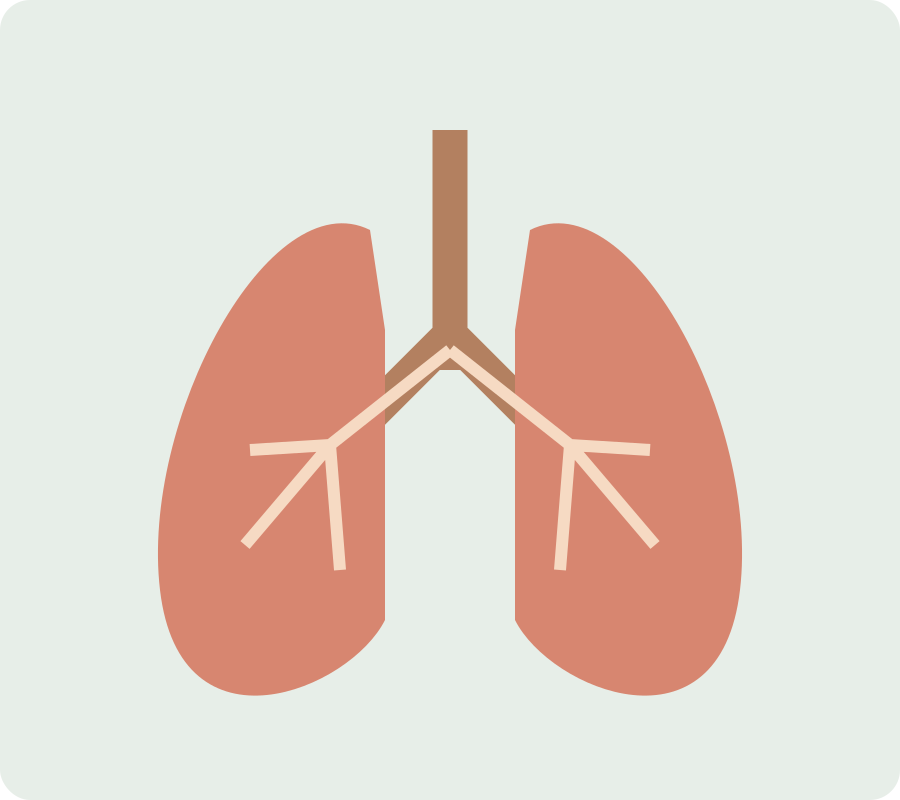
A short guide to the language of breathing.
Your lungs are part of the respiratory system. Air passes through a network of airways, reaching tiny air sacs where gases move between the air and blood. Oxygen is taken into the body and carbon dioxide is breathed out. This is a broad introduction rather than a detailed anatomy lesson.
Breathing is also connected with movement of the chest and diaphragm. A stylised picture can help orient a reader, but it cannot show every structure or explain an individual’s symptoms.
Words you may come across
Airways: the passages through which air travels.
Breathlessness: the feeling that breathing is uncomfortable or difficult.
Spirometry: a breathing test used by clinicians to assess how air moves out of the lungs.
Conditions are not interchangeable.
Asthma and chronic obstructive pulmonary disease (COPD) are different conditions. A cough, wheeze or breathlessness does not, on its own, establish either diagnosis. Clinical assessment matters because similar symptoms can have different causes.
The NHS describes COPD as lung damage associated with coughing and shortness of breath. Smoking and workplace exposure to dust or fumes are among the factors it discusses. Diagnosis may involve spirometry and other tests. Read the full NHS overview for the detail rather than relying on a short definition here.
If you already have a diagnosis, keep using medicines as your care team directs. Ask your doctor, nurse or pharmacist if you need help understanding an inhaler or treatment plan. Do not change prescribed treatment because of general website content.
Make an appointment easier to use.
Bring your questions in everyday language. You might ask what a test is intended to show, when results are expected, who will explain them, and what to do if symptoms change while you wait. Ask for an explanation of any unfamiliar term.
If you are reading on behalf of someone else, ask what they most want help understanding. Practical details such as appointment access, language support and written instructions can be as useful as learning the name of a test.
Sources & further reading
Source links checked 16 November 2026. This independent overview has not been clinically reviewed.